A game lodge is not a hotel. It operates in a remote location, hosts high-value international guests, manages dangerous wildlife, depends on infrastructure that municipalities don’t maintain, and generates revenue that is entirely seasonal. Standard hospitality insurance covers almost none of these realities.
The Risks That Standard Hospitality Policies Miss
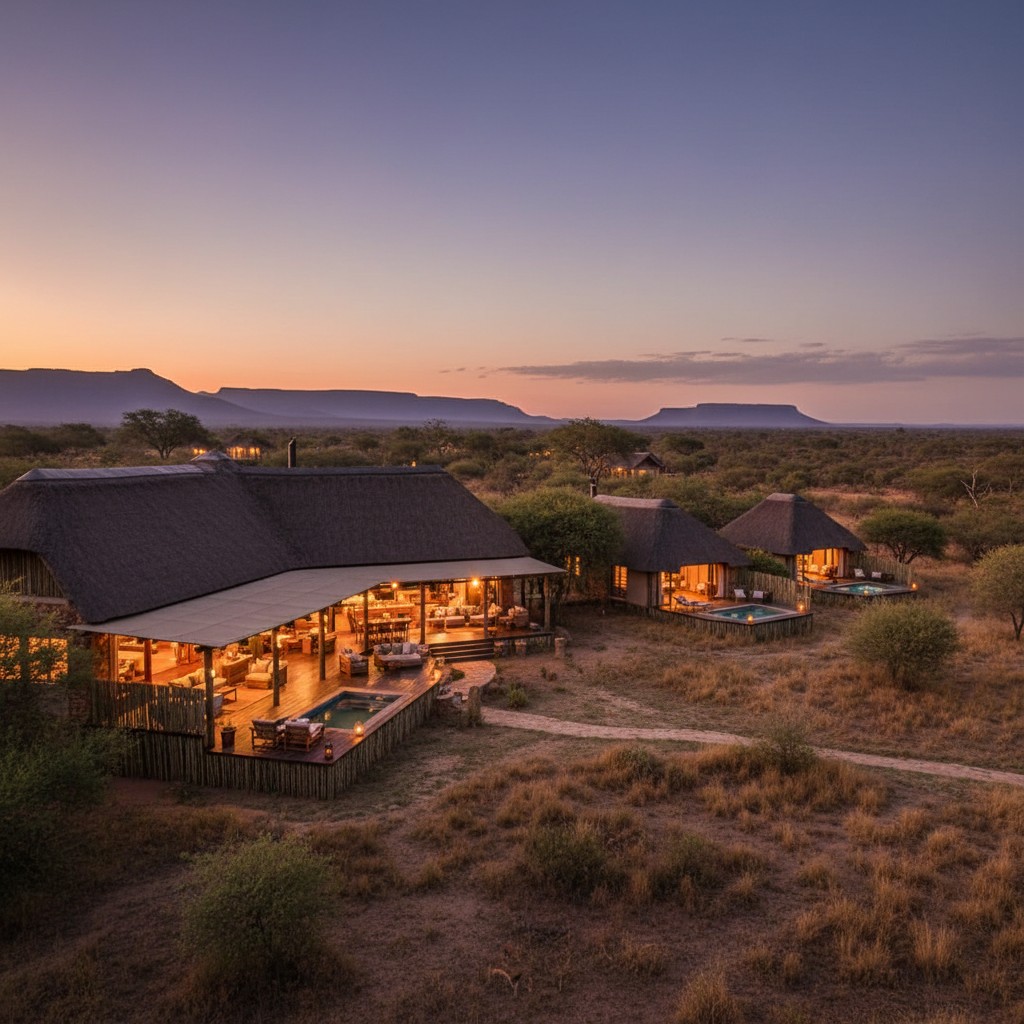
South Africa’s game lodge and hospitality sector faces a unique combination of exposures that most commercial insurers underwrite with urban assumptions. A guest injury on a game drive is not the same liability as a slip in a hotel corridor. A bushfire that destroys a thatched lodge 80 kilometres from the nearest fire station is not the same property risk as a CBD restaurant fire. A three-month booking cancellation wave triggered by a travel advisory is not the same business interruption as a burst pipe closing a conference venue for a week.
The gaps we consistently find in game lodge and hospitality programmes:
Guest liability limits that don’t reflect the cost of a serious injury to an international tourist — where the claim is litigated in the guest’s home jurisdiction, not in South Africa, at South African quantum levels.
Wildlife mortality cover that is either absent or limited to a fraction of the actual replacement value of breeding stock, rare species, or game that has taken decades to establish.
Business interruption triggers that require physical damage to the property — meaning a travel advisory, an access road washout, or a regional security incident that empties your bookings for two months produces no payout.
Remote location risk — fire response times of 90 minutes or more, no municipal water pressure, limited emergency medical access — none of which is reflected in standard property underwriting.
Load shedding exposure on guest experience, food spoilage, security systems, and electric fencing that keeps both guests and wildlife where they should be.
How Vitari Structures Lodge & Hospitality Programmes
We understand that a game reserve or lodge operation is a complex ecosystem — property, liability, wildlife, tourism revenue, environmental stewardship, and guest safety all intersecting in a remote setting. The insurance programme needs to reflect that complexity, not flatten it into a generic commercial property template.
Vitari structures hospitality programmes by mapping every revenue stream and every liability exposure point — from the moment a guest books to the moment they leave a review. We engage specialist underwriters who understand bush risk, not brokers who treat a R40 million thatched lodge the same as a warehouse in Germiston.
For lodge groups and hospitality portfolios with multiple properties, we explore whether a cell-captive arrangement can deliver better economics on the high-frequency claims — guest property damage, minor injuries, food-related incidents — while conventional cover handles the catastrophic tail.
Benjamin Parham, Founder
Remote risk
Underwriting that accounts for distance from emergency services and infrastructure
International guests
Liability limits calibrated for cross-jurisdictional claims
Wildlife cover
Mortality and breeding stock protection at realistic replacement values
5–7 days
Free audit of your lodge or hospitality programme
Is Your Lodge Properly Protected?
A free audit of your hospitality programme. Before a guest claim answers the question for you.
Or call: +27 60 579 0930